Let's be real, the initial thrill of booking an international trip can quickly be replaced by a low-grade hum of anxiety. Navigating foreign transit systems, overcoming language barriers, and managing your budget in a different currency are universal travel headaches. You're not just planning a vacation; you're preparing to problem-solve in real-time. But here's the good news: your smartphone is the most powerful tool in your travel arsenal, capable of transforming these potential stressors into seamless parts of your adventure.
By the end of this guide, you'll be equipped with three app-based solutions that tackle the core challenges of language, navigation, and money. We'll move beyond the obvious choices to explore apps that offer a deeper, more integrated experience, turning your phone from a distraction into your personal travel concierge.
While Google Translate is a decent starting point, it often falls short in noisy markets or during rapid-fire conversations. The game-changer is an app that works with live, spoken dialogue. Imagine you're in a Tokyo restaurant, trying to ask the chef about ingredients. You speak into your phone in English, and it speaks back to the chef in clear, fluent Japanese. He replies, and you hear the translation in your ear almost instantly. This isn't science fiction; it's the core function of advanced translation apps that specialize in conversation mode.
The magic lies in the offline capabilities. Before your trip, you download the language pack. Suddenly, you're not reliant on spotty airport Wi-Fi to ask for directions in a Rome subway. You can scan a menu with your camera and see the English translation overlaid on your screen. The most common mistake travelers make is assuming all translation apps are created equal. They test a basic one, get frustrated by its lag or inaccuracy, and give up. The key is to invest in one that prioritizes conversational speech and robust offline functionality. I once navigated a complex pharmacy request in rural Portugal solely through an app like this, and the relief was palpable.
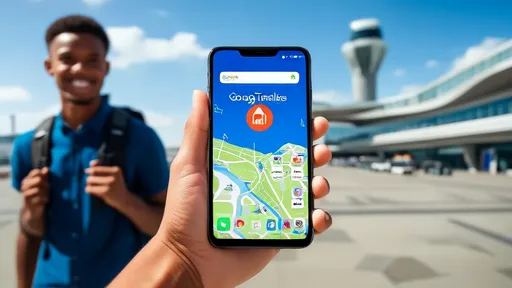
Google Maps is fantastic until you lose your data connection and find yourself disoriented in a labyrinthine old town. This is where dedicated offline mapping apps become non-negotiable. The best ones allow you to download detailed, vector-based maps of entire countries or cities before you leave home. We're not talking about a simple, blurry screenshot; these are fully interactive maps you can zoom into, search, and use for turn-by-turn walking, cycling, and even public transit directions—all without a single bar of service.
Here's how it works in a real-world scenario: You land in Berlin, switch your phone to airplane mode to avoid roaming charges, and open your offline maps app. You can locate your hotel, find the nearest U-Bahn station, and get walking directions without ever connecting to a network. The real pro-tip is using the app's bookmark feature. I always star my accommodation, key attractions, and recommended restaurants from my research. This creates a personalized travel guide on my home screen, eliminating the frantic scrambling through saved emails or screenshots. Many people stick with their native maps app and suffer the consequences of high data charges or getting utterly lost. Downloading a dedicated offline maps app is a five-minute task that pays for itself on your first day abroad.
Nothing sours a vacation vibe like hidden bank fees and the mental gymnastics of currency conversion. While your bank's app shows your balance in dollars, you're spending in euros, pesos, or yen. This disconnect makes budgeting on the go incredibly difficult. A top-tier financial app designed for travelers solves this by giving you a real-time, accurate view of your spending in both the local currency and your home currency. It automatically categorizes your transactions—meals, transport, souvenirs—so you know exactly where your money is going.
The actionable step here is to link your primary travel credit or debit card to one of these apps. As soon as you buy a coffee in Paris, a notification pops up: "Spent €4.50 on Food & Drink (~$4.85)." This immediate feedback is a powerful budgeting tool. The common pitfall is trying to do this manually with a notes app or, worse, ignoring it until you get home to a frightening credit card statement. By tracking expenses as they happen, you can rein in your spending before it spirals out of control. On a two-week trip through Southeast Asia, this method helped me reallocate funds from underspent categories (like transport) to experiences I loved more (like local cooking classes), making the trip far more fulfilling.
The true value of these apps extends beyond their practical functions. It's about the psychological freedom they provide. When you're not constantly anxious about getting lost, being misunderstood, or blowing your budget, your mind is free to fully immerse itself in the experience. Travel is fundamentally about connection—with places, cultures, and people. These digital tools remove the friction that so often gets in the way of that connection. They handle the logistics so you can focus on the magic of hearing a new language, discovering a hidden alleyway, or sharing a laugh with a local vendor. Your phone ceases to be a tether to home and becomes a silent, efficient partner in your exploration.
Mastering international travel isn't about memorizing phrasebooks or carrying giant paper maps. It's about smartly leveraging technology to handle the predictable stresses, freeing you up for the spontaneous joy that makes travel unforgettable. Start by downloading and testing one of these apps for your next local outing. Get familiar with its interface, and you'll board your flight with a newfound sense of confidence. Your adventure awaits, and now, you're truly equipped to enjoy it. For more deep dives into travel tech and other hacks, be sure to follow along.

By Christopher Harris/Nov 17, 2025

By David Anderson/Nov 17, 2025

By Emma Thompson/Nov 17, 2025

By Olivia Reed/Nov 17, 2025
By Eric Ward/Nov 17, 2025

By Benjamin Evans/Nov 17, 2025

By David Anderson/Nov 17, 2025

By David Anderson/Nov 17, 2025

By David Anderson/Nov 17, 2025

By Daniel Scott/Nov 17, 2025

By Laura Wilson/Nov 17, 2025

By John Smith/Nov 17, 2025

By George Bailey/Nov 17, 2025

By Michael Brown/Nov 17, 2025

By Joshua Howard/Nov 17, 2025
By George Bailey/Nov 17, 2025

By Sophia Lewis/Nov 17, 2025

By Laura Wilson/Nov 17, 2025

By Samuel Cooper/Nov 17, 2025

By Lily Simpson/Nov 17, 2025