I never expected a single bowl of noodles to alter my entire perspective on food, travel, and what it means to truly experience a place. It happened on a sweltering Tuesday in Bangkok, down a narrow alleyway I almost walked right past. The scent of garlic and pork fat hit me first, followed by the rhythmic chopping of a vendor who’d probably been making the same dish for thirty years. For the equivalent of ten U.S. dollars, I ordered what looked like simple noodles with pork. What I received was a masterclass in balance, texture, and tradition—a meal so profound it reshaped how I approach eating, not just while traveling, but every single day.
Before that moment, I’d been what you might call a “checklist traveler.” I moved from one famous restaurant to another, snapping photos of beautifully plated dishes that often tasted fine but left no lasting impression. My meals were expensive, carefully researched, and ultimately forgettable. That ten-dollar bowl of kuay teow reua, or boat noodles, did more than fill my stomach. It taught me that the soul of a city’s cuisine isn’t found in its most polished, Instagram-friendly spots, but in the humble stalls where locals have been eating for generations. By the end of this piece, you’ll understand how to find these transformative meals yourself, why they matter beyond just taste, and how to carry their lessons home with you.
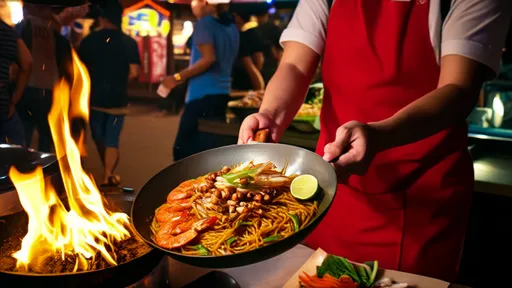
Finding incredible street food in Bangkok isn’t hard, but finding a dish that feels like a revelation requires letting go of your itinerary. The stall I stumbled upon had no English sign, no menu, and no seating apart from a few plastic stools. The cook, a woman in her sixties, worked with a quiet focus—her hands moving between broth, noodles, and herbs without wasted motion. I pointed at what someone else was eating, handed over a hundred-baht note, and received a bowl brimming with dark, aromatic broth, chewy rice noodles, tender pork slices, meatballs, and a perfectly soft-boiled egg. The first spoonful of that broth was a shock to the system: deeply savory, slightly sweet, with a hint of spice and the complex flavor of slow-simmered bones. It was rich without being heavy, layered without being complicated. Every component had a purpose.
What makes a meal like this so memorable isn’t just the taste. It’s the context. You’re not just eating; you’re participating in a ritual. Around me, office workers on their lunch break slurped noodles quickly, families shared stories between bites, and the cook acknowledged regulars with a slight nod. I was the only tourist there, and for those twenty minutes, I felt woven into the daily fabric of the city. That sense of connection—of being a temporary local rather than a spectator—is something no fine-dining restaurant can replicate. It’s a reminder that food is, at its core, about community and continuity.
We’ve been conditioned to believe that exceptional experiences must come with a high price tag. We save up for tasting menus, book months in advance for famous chefs’ tables, and often return home with memories that are impressive but not necessarily meaningful. Street food flips that script. With minimal overhead and a reliance on regular customers, these vendors perfect one or two dishes through repetition and refinement. There’s no room for error when your livelihood depends on consistency. That bowl of boat noodles was the result of decades of tweaking—a recipe passed down and honed until it became irreplaceable.
One common mistake travelers make is assuming that street food is risky or unhygienic. Look for stalls with high turnover—where the food is cooked fresh constantly—and where you see locals eating. Notice how ingredients are handled. In my case, the vegetables were kept on ice, the broth was kept at a rolling boil, and the cook used utensils rather than bare hands. Trust your instincts, but don’t let fear rob you of these experiences. Another error is trying to do too much. Rather than hopping between five stalls in one night, find one that looks promising and order their signature dish. Sit. Watch. Taste slowly. Let the meal unfold instead of treating it as a photo opportunity.
After returning from that trip, I started applying the principles of that ten-dollar meal to my cooking and dining back home. I began seeking out family-run restaurants instead of trendy spots. I learned to make a simple version of that boat noodle broth, realizing that the magic wasn’t in exotic ingredients, but in technique and patience. I simmered bones for hours, toasted spices carefully, and balanced flavors until it felt right. It never quite matched the original, but the process itself became a form of meditation—a way to reconnect with that Bangkok alleyway in my own kitchen.
This approach extends beyond Thai food. Whether it’s perfecting a humble pasta dish, learning to make tortillas from scratch, or simply paying more attention to the quality of ingredients in a simple salad, the goal is the same: to find joy and meaning in food that doesn’t need to be expensive or elaborate to be extraordinary. It’s about valuing the time and care that goes into preparation, and recognizing that the best meals are often the ones that tell a story.
That unassuming bowl of noodles did more than satisfy my hunger. It reminded me that the most valuable experiences in life are often hiding in plain sight, waiting for us to slow down and notice them. In a world that glorifies busyness and luxury, there’s something radical about choosing simplicity. It’s a lesson in mindfulness, in appreciating the skill behind something that might otherwise be dismissed as ordinary. Every time I replicate that meal at home or seek out a similar experience in a new city, I’m not just eating—I’m remembering to look beyond the surface, to value authenticity over appearance, and to find beauty in the everyday.
Preventing a second heart attack isn’t about perfection—it’s about small, consistent choices. Start with one change today—your future self will thank you. Grab your bag and try this layover plan—you won’t regret it. For more tips, download our free checklist. Follow me for more deep dives into travel hacks.

By Christopher Harris/Nov 17, 2025

By David Anderson/Nov 17, 2025

By Emma Thompson/Nov 17, 2025

By Olivia Reed/Nov 17, 2025

By Eric Ward/Nov 17, 2025
By Benjamin Evans/Nov 17, 2025

By David Anderson/Nov 17, 2025

By David Anderson/Nov 17, 2025

By David Anderson/Nov 17, 2025
By Daniel Scott/Nov 17, 2025

By Laura Wilson/Nov 17, 2025

By John Smith/Nov 17, 2025

By George Bailey/Nov 17, 2025
By Michael Brown/Nov 17, 2025

By Joshua Howard/Nov 17, 2025
By George Bailey/Nov 17, 2025

By Sophia Lewis/Nov 17, 2025
By Laura Wilson/Nov 17, 2025

By Samuel Cooper/Nov 17, 2025
By Lily Simpson/Nov 17, 2025