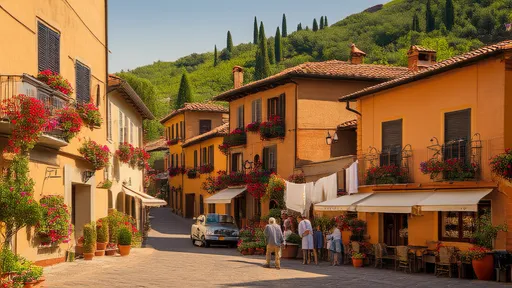
I never expected to fall for a place so completely until I stumbled upon Spello, a tiny medieval gem tucked away in Umbria's rolling hills. While everyone flocks to nearby Assisi or the more famous Tuscan towns, this quiet community of stone houses and flower-draped alleyways quietly works its magic on unsuspecting visitors. It’s the kind of town where time slows down, where the morning bakery scent mingles with jasmine, and where an afternoon passeggiata feels like a sacred ritual.
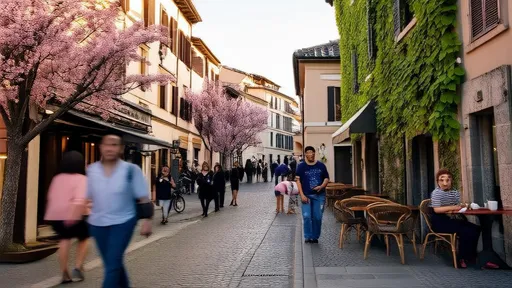
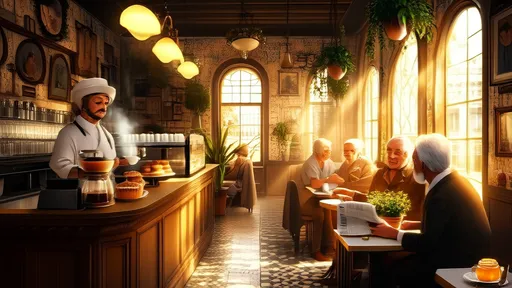
What makes Spello different isn't just its beauty—it's the palpable sense of belonging that seeps into you within hours of arriving. The cobblestone streets aren't mere tourist attractions; they're living arteries where neighbors greet each other by name, where shopkeepers remember your coffee order, and where the rhythm of life feels both ancient and deeply personal. I found myself lingering at café tables for hours, not out of laziness, but because there was no reason to rush.
The town's artistic soul reveals itself gradually. During my visit in early summer, I discovered Spello's famous Infiorate tradition—an entire night where locals create breathtaking floral carpets along the streets for Corpus Domini. But even without the festival, artistry is everywhere: in the perfectly preserved Roman gates, the frescoes by Pinturicchio inside Santa Maria Maggiore, and the way sunlight filters through arched passages onto rose-colored stone. Every corner feels intentionally composed yet completely authentic.
Food here becomes a meditation on simplicity. At family-run trattorias like Il Molino, I learned that Umbrian cuisine needs no embellishment. Wild boar ragù simmered for hours, bruschetta with new olive oil from nearby groves, and sagrantino wine that tastes of the very soil it grew in—each meal felt like an invitation into someone's home. The chef at one restaurant even taught me how to recognize truly fresh pasta by its slight roughness. These weren't transactional dining experiences; they were conversations.
What surprised me most was how quickly Spello reshaped my travel priorities. Instead of rushing to see everything, I found contentment in watching the light change on the valley below from the town walls. Instead of checking monuments off a list, I remember the pharmacist who walked me to my destination when I got lost, and the elderly woman who pointed out the best spot to watch sunset over the olive groves. The town doesn't just show you its sights—it shows you its heart.
The magic of Spello lingers long after you leave. It's in the small moments: the sound of church bells echoing between stone buildings, the taste of dark cherry jam from a corner alimentari, the way the entire town seems to exhale as evening falls. This isn't a place you simply visit—it's a place that becomes part of you. I went looking for another pretty Italian town and found instead a new standard for what travel could feel like: not just seeing, but connecting; not just photographing, but absorbing.
If you find yourself in Umbria, resist the urge to make Spello a quick stop. Give it at least two nights. Wake up early to walk the empty streets as shopkeepers roll out their awnings. Stay up late to see the moon rise over the Roman walls. Let yourself be adopted by this town that remembers how to live rather than just how to host. Some places check boxes on a travel itinerary; Spello rewrites the entire list.
By Christopher Harris/Nov 17, 2025
By David Anderson/Nov 17, 2025

By Emma Thompson/Nov 17, 2025

By Olivia Reed/Nov 17, 2025

By Eric Ward/Nov 17, 2025
By Benjamin Evans/Nov 17, 2025
By David Anderson/Nov 17, 2025

By David Anderson/Nov 17, 2025
By David Anderson/Nov 17, 2025
By Daniel Scott/Nov 17, 2025

By Laura Wilson/Nov 17, 2025
By John Smith/Nov 17, 2025

By George Bailey/Nov 17, 2025
By Michael Brown/Nov 17, 2025

By Joshua Howard/Nov 17, 2025
By George Bailey/Nov 17, 2025
By Sophia Lewis/Nov 17, 2025

By Laura Wilson/Nov 17, 2025
By Samuel Cooper/Nov 17, 2025
By Lily Simpson/Nov 17, 2025