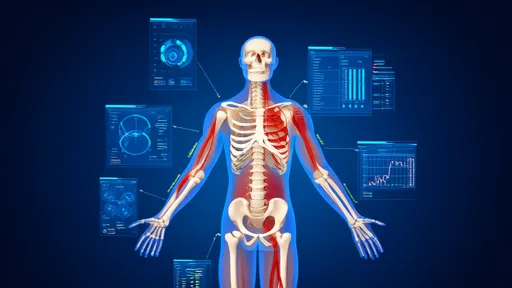
The medical technology landscape is undergoing a quiet revolution as digital twin technology begins transforming how we assess and monitor joint mobility. This emerging approach creates dynamic virtual models of human joints that mirror their physical counterparts with startling accuracy, opening new frontiers in musculoskeletal evaluation.
Digital twins for joint assessment represent more than just static 3D models—they are living simulations that evolve with patient data. By combining motion capture systems, wearable sensors, and advanced biomechanical algorithms, clinicians can now observe joint function in ways that physical examinations alone could never reveal. The technology captures subtle variations in movement patterns that might indicate early-stage degeneration or incomplete recovery from injury.
What makes these digital twins particularly valuable is their ability to contextualize range of motion data. Traditional goniometric measurements provide isolated snapshots of joint angles at specific moments. In contrast, digital twin assessments track the entire movement continuum, analyzing how joints behave through complete arcs of motion under various loads and velocities. This holistic perspective helps identify compensatory movement patterns that patients often develop unconsciously after injuries.
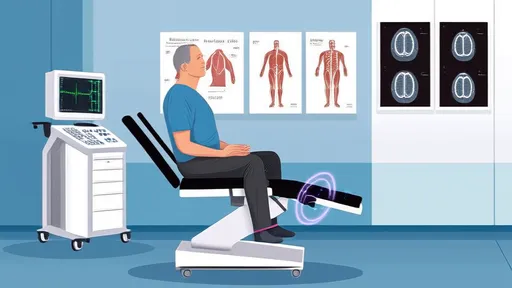
The clinical implementation of joint mobility digital twins is showing particular promise in post-surgical rehabilitation. Orthopedic surgeons report that having access to continuous digital twin data allows them to make more informed decisions about rehabilitation progression. Instead of relying on periodic clinic visits where patients may perform differently due to situational factors, the digital twin provides an objective record of home exercise performance and daily functional movements.
Sports medicine stands to benefit enormously from this technology as well. Athletic trainers can use digital twins to compare an athlete's current joint mobility against their pre-injury baseline or sport-specific ideal ranges. The system can flag subtle asymmetries that might predispose to injury or indicate incomplete recovery. Perhaps most importantly, the visual nature of digital twin feedback helps athletes better understand their movement limitations and rehabilitation goals.
Chronic disease management represents another area where joint digital twins are proving valuable. For patients with rheumatoid arthritis or osteoarthritis, these virtual models can detect progressive changes in joint mechanics long before they become clinically apparent. Early detection of declining range of motion enables timely intervention with physical therapy or medication adjustments to preserve joint function.
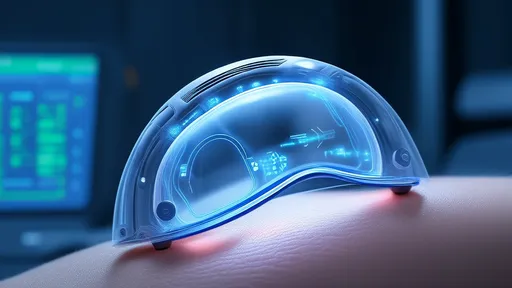
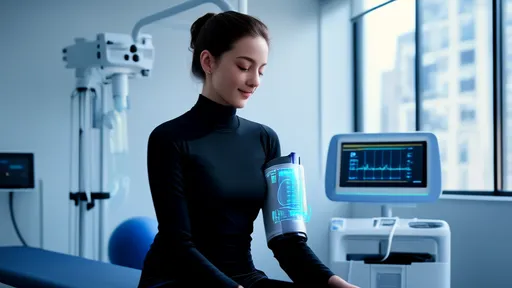
Technological foundations of these systems combine several cutting-edge components. High-resolution inertial measurement units (IMUs) capture movement data with clinical precision, while machine learning algorithms interpret the complex biomechanical relationships between adjacent joints. Cloud computing enables the continuous updating of digital twins with new movement data, creating increasingly accurate representations over time.
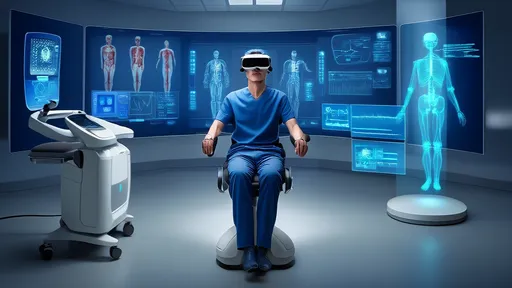
The patient experience with joint mobility digital twins tends to be remarkably intuitive. Many systems use augmented reality interfaces that allow individuals to see their own movement patterns overlaid with ideal ranges or previous performance. This immediate visual feedback creates powerful motivation for rehabilitation adherence and helps patients develop better body awareness during therapeutic exercises.
Data security and privacy considerations remain paramount in developing these systems. Given the sensitive nature of health data, robust encryption and strict access controls are essential. Most platforms now employ edge computing solutions where possible, processing data locally on devices rather than transmitting raw movement information to cloud servers.
Validation studies have shown promising results for digital twin assessment accuracy. Recent research demonstrates strong correlation between digital twin predictions and direct physical measurements, with some studies suggesting the virtual assessments may actually be more reliable than traditional methods by eliminating human measurement variability. Longitudinal data is beginning to reveal how digital twins can predict functional outcomes based on early recovery patterns.
The economic implications of widespread digital twin adoption are still being analyzed, but early indicators suggest potential for significant healthcare cost savings. By enabling earlier detection of mobility issues and more precise rehabilitation guidance, these systems may reduce unnecessary imaging, prevent secondary injuries, and shorten recovery timelines. Insurance providers are beginning to recognize the value proposition, with several major carriers initiating pilot reimbursement programs.
Looking ahead, the integration of joint mobility digital twins with other health data streams promises even greater insights. Combining motion data with muscle activity readings from EMG sensors or force plate measurements could create comprehensive movement profiles. Some researchers are exploring how to incorporate real-time tissue imaging data to model not just joint mechanics but the behavior of surrounding soft tissues as well.
As the technology matures, we're likely to see more personalized predictive capabilities emerge. Advanced algorithms may soon be able to forecast an individual's risk of developing certain musculoskeletal conditions based on their unique movement patterns and joint mechanics. This shift from reactive to proactive medicine could transform how we approach joint health maintenance across the lifespan.
The democratization of digital twin technology remains an important challenge to address. Current systems often require specialized equipment that limits accessibility. However, several research groups are making progress on smartphone-based solutions that could bring basic joint assessment capabilities to underserved populations and remote areas where specialist care is scarce.
Professional education represents another critical frontier. As digital twin assessments enter mainstream practice, healthcare providers will need training in interpreting the rich datasets these systems generate. Medical schools and physical therapy programs are beginning to incorporate digital twin interpretation into their curricula, but widespread competency will take time to develop.
Ethical considerations around data ownership and usage continue to evolve alongside the technology. Clear guidelines are needed regarding how long movement data should be retained, who can access it, and for what purposes. The medical community is actively engaging with these questions through professional organizations and ethics boards.
For all its promise, digital twin technology will never fully replace the clinician's judgment and the therapeutic value of human touch in rehabilitation. Rather, it serves as a powerful tool to enhance clinical decision-making and patient engagement. The most successful implementations will likely be those that find the right balance between technological sophistication and human-centered care.
The coming years will undoubtedly see continued refinement of joint mobility digital twins as the underlying technologies advance. From improved sensor miniaturization to more sophisticated biomechanical modeling, each innovation will enhance the clinical utility of these virtual assessments. What began as an intriguing concept in research labs is rapidly becoming an indispensable tool for preserving and restoring human movement.

By /Jul 21, 2025
By /Jul 21, 2025
By /Jul 21, 2025
By /Jul 21, 2025
By /Jul 21, 2025

By /Jul 21, 2025
By /Jul 21, 2025
By /Jul 21, 2025
By /Jul 21, 2025
By /Jul 21, 2025

By /Jul 21, 2025
By /Jul 21, 2025

By /Jul 21, 2025
By /Jul 21, 2025

By /Jul 21, 2025
By /Jul 21, 2025

By /Jul 21, 2025
By /Jul 21, 2025
By /Jul 21, 2025
By /Jul 21, 2025