Optimization of Pore Structure in 3D Printed Organ Scaffolds

Jul 21, 2025 By

The field of regenerative medicine has witnessed remarkable advancements in recent years, with 3D-printed organ scaffolds emerging as a promising solution for tissue engineering. Among the critical factors influencing their success, pore optimization stands out as a pivotal element that determines the scaffold's functionality, cellular behavior, and eventual integration into the host tissue. Researchers are now delving deeper into the intricate balance between porosity, mechanical strength, and biological performance to unlock the full potential of these structures.

Understanding the Role of Porosity in 3D-Printed Scaffolds

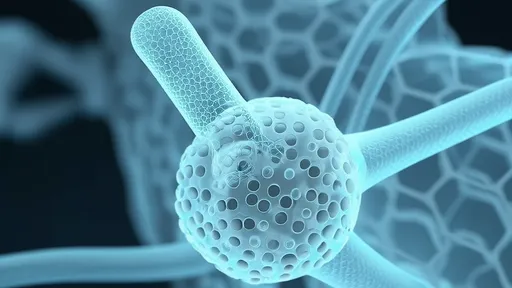
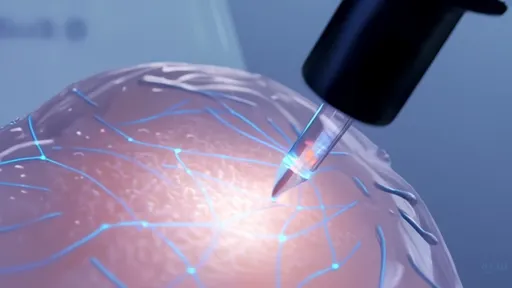
Porosity is not merely a physical characteristic of 3D-printed scaffolds; it is a dynamic feature that directly impacts cell migration, nutrient diffusion, and vascularization. A scaffold with inadequate porosity may hinder cell infiltration, leading to poor tissue regeneration, while excessive porosity could compromise its structural integrity. The challenge lies in designing a pore architecture that mimics the natural extracellular matrix, providing an optimal environment for cells to thrive. Recent studies have highlighted the importance of gradient porosity, where pore size varies across the scaffold to accommodate different cell types and mechanical demands.

Advanced computational modeling has become indispensable in this pursuit. By simulating fluid dynamics and stress distribution, researchers can predict how pores of varying shapes and sizes will behave under physiological conditions. For instance, hexagonal pore designs have shown superior nutrient flow compared to traditional square or circular pores, underscoring the need for geometry-specific optimization. These insights are paving the way for scaffolds that are not only biocompatible but also biomechanically robust.

Material Innovations and Their Impact on Pore Design

The choice of material plays a crucial role in determining the feasibility of pore optimization. Biopolymers like polycaprolactone (PCL) and gelatin methacryloyl (GelMA) are widely used due to their tunable properties. However, each material presents unique challenges. PCL, while mechanically stable, often requires post-processing to achieve desired porosity, whereas GelMA offers excellent cell adhesion but may lack the necessary stiffness for certain applications. To address these limitations, composite materials are gaining traction. For example, incorporating nanoparticles or hydrogels can enhance pore wall stability without sacrificing interconnectivity.

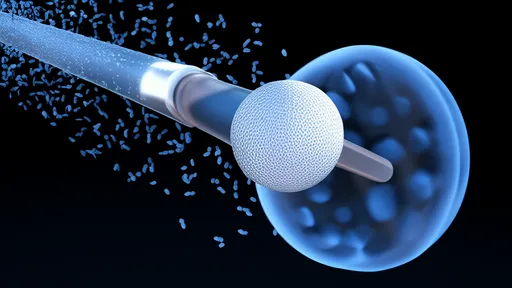
One groundbreaking approach involves the use of sacrificial materials during printing. By embedding water-soluble polymers or microspheres within the scaffold, researchers can create highly interconnected pores that dissolve after printing, leaving behind a meticulously designed porous network. This technique has proven particularly effective for creating vascular-like channels, which are essential for supplying oxygen and nutrients to cells in thicker scaffolds. The ability to precisely control pore size and distribution through such methods is revolutionizing the field.

Biological Implications of Optimized Porosity

The ultimate goal of pore optimization is to foster an environment where cells can proliferate, differentiate, and form functional tissue. Studies have demonstrated that scaffolds with optimized porosity significantly enhance stem cell differentiation into target lineages, such as osteocytes or cardiomyocytes. This is attributed to the improved exchange of biochemical signals and mechanical cues within the porous network. Moreover, immune response—a critical factor in scaffold integration—is heavily influenced by pore size. Smaller pores tend to reduce inflammatory reactions, while larger pores promote macrophage polarization toward a regenerative phenotype.

Another fascinating development is the incorporation of bioactive molecules within the pores. By embedding growth factors or drugs into the scaffold's porous structure, researchers can create localized delivery systems that guide tissue regeneration. For instance, vascular endothelial growth factor (VEGF) released from a scaffold's pores can accelerate blood vessel formation, addressing one of the major hurdles in engineering large tissues. These strategies highlight the multifaceted role of porosity in not just structural design but also biological functionality.

Challenges and Future Directions

Despite significant progress, several challenges remain in the quest for ideal pore optimization. One major hurdle is the scalability of fabrication techniques. While lab-scale 3D printers can produce scaffolds with exquisite pore detail, translating these methods to industrial-scale production without compromising precision is daunting. Additionally, the long-term degradation of scaffolds and its impact on pore structure—and consequently tissue regeneration—warrants further investigation. Researchers are exploring smart materials that degrade in sync with tissue growth, ensuring sustained mechanical support throughout the healing process.

The future of pore optimization lies in the convergence of multiple disciplines. Artificial intelligence, for instance, is being leveraged to analyze vast datasets on pore designs and their biological outcomes, enabling predictive modeling for customized scaffolds. Similarly, advancements in bioprinting technologies, such as multi-material extrusion, are opening new avenues for creating heterogeneous pore architectures tailored to complex organs like the liver or heart. As these innovations mature, the dream of fully functional 3D-printed organs may soon become a reality.

In conclusion, pore optimization in 3D-printed organ scaffolds represents a delicate interplay of engineering, biology, and material science. By continuing to refine pore design, researchers are not only enhancing the efficacy of these scaffolds but also inching closer to solving some of the most pressing challenges in regenerative medicine. The journey is complex, but the potential rewards—for patients and healthcare alike—are immeasurable.

Recommend Posts
Health

AI-assisted Training for Language Impairments

By /Jul 21, 2025

The rapid advancement of artificial intelligence has opened new frontiers in overcoming language barriers, creating unprecedented opportunities for global communication and education. Across industries and academic institutions, AI-powered language training tools are transforming how people acquire new languages and improve their communication skills.
Health

Electromyographic Prosthetic Tactile Feedback System

By /Jul 21, 2025

The field of prosthetic technology has witnessed a groundbreaking advancement with the development of myoelectric prosthetic limbs integrated with tactile feedback systems. These sophisticated devices are transforming the lives of amputees by restoring not just mobility but also the sense of touch. Unlike traditional prosthetics, which rely solely on visual cues for operation, myoelectric prosthetics with tactile feedback bridge the gap between the artificial limb and the user’s nervous system, creating a more intuitive and natural experience.
Health

Nutritional Dynamic Monitoring Technology during Lactation

By /Jul 21, 2025

The field of maternal and infant health has witnessed significant progress in recent years, particularly in the area of nutritional monitoring during lactation. As breastfeeding remains a critical phase for both mother and child, researchers have developed sophisticated dynamic monitoring technologies to ensure optimal nutrient intake. These innovations are transforming how healthcare providers support lactating women, moving beyond traditional static dietary assessments to real-time, personalized nutrition tracking.
Health

Intelligent Drug-Releasing Wound Dressing System

By /Jul 21, 2025

The field of wound care has witnessed a revolutionary advancement with the development of intelligent drug delivery systems for wound dressings. These cutting-edge technologies are transforming how chronic and acute wounds are treated, offering targeted therapy with minimal human intervention. By integrating responsive materials, sensors, and controlled-release mechanisms, smart dressings promise to accelerate healing while reducing complications.
Health

Spinal Cord Stimulation for Restoring Bladder Function

By /Jul 21, 2025

For millions of people living with spinal cord injuries or neurological disorders, bladder dysfunction remains one of the most challenging and life-altering consequences. The loss of voluntary control over urination not only affects physical health but also takes a significant psychological toll. However, recent advancements in spinal cord stimulation (SCS) are offering new hope for restoring bladder function in these patients.
Health

Optimization of Pore Structure in 3D Printed Organ Scaffolds

By /Jul 21, 2025

The field of regenerative medicine has witnessed remarkable advancements in recent years, with 3D-printed organ scaffolds emerging as a promising solution for tissue engineering. Among the critical factors influencing their success, pore optimization stands out as a pivotal element that determines the scaffold's functionality, cellular behavior, and eventual integration into the host tissue. Researchers are now delving deeper into the intricate balance between porosity, mechanical strength, and biological performance to unlock the full potential of these structures.
Health

Digital Twin Assessment of Joint Motion Range

By /Jul 21, 2025

The medical technology landscape is undergoing a quiet revolution as digital twin technology begins transforming how we assess and monitor joint mobility. This emerging approach creates dynamic virtual models of human joints that mirror their physical counterparts with startling accuracy, opening new frontiers in musculoskeletal evaluation.
Health

Parkinson's Disease Tremor Therapy Parameters

By /Jul 21, 2025

Parkinson’s disease, a progressive neurodegenerative disorder, continues to challenge both patients and clinicians in managing its motor and non-motor symptoms. Among the array of adjunct therapies being explored, vibration therapy has garnered attention for its potential to improve mobility, reduce tremors, and enhance quality of life. Unlike pharmaceutical interventions, vibration therapy offers a non-invasive approach with minimal side effects, making it an appealing option for long-term management. However, the efficacy of this therapy hinges on precise parameters, including frequency, amplitude, duration, and application method.
Health

Intelligent Monitoring of Burn Pressure Garments

By /Jul 21, 2025

Burn injuries are among the most physically and emotionally devastating traumas a person can endure. For survivors, the road to recovery often involves months or even years of wearing specialized pressure garments to minimize scarring and improve functional outcomes. These garments, while effective, have remained largely unchanged for decades – until now. A new wave of smart pressure garments equipped with advanced monitoring capabilities is poised to revolutionize post-burn care.
Health

Game-Based Design for Vestibular Rehabilitation

By /Jul 21, 2025

The intersection of vestibular rehabilitation and gamification represents one of the most exciting frontiers in modern therapeutic design. For patients suffering from dizziness, imbalance, or vertigo due to vestibular disorders, traditional exercises can often feel repetitive and monotonous. This is where game-based interventions step in, transforming rehabilitation into an engaging, interactive experience that motivates patients while delivering measurable clinical outcomes.
Health

New Findings in Placental Microbiome Research

By /Jul 21, 2025

For decades, the placenta was considered a sterile environment, a protective barrier shielding the developing fetus from microbial invaders. This long-held belief shaped obstetric practices and our fundamental understanding of fetal development. However, groundbreaking research over the past fifteen years has radically transformed this perspective, revealing that the placenta harbors its own unique microbial ecosystem - findings that are reshaping reproductive medicine and neonatal care.
Health

Breakthrough in Artificial Skin Sensor Precision

By /Jul 21, 2025

The field of prosthetics and robotics has taken a monumental leap forward with recent breakthroughs in artificial skin sensing precision. Researchers across multiple institutions have achieved unprecedented levels of tactile sensitivity in synthetic skin materials, bringing us closer than ever to replicating the remarkable sensory capabilities of human skin.
Health

Intervention of Intestinal Flor Colonization in Preterm Infants

By /Jul 21, 2025

The delicate ecosystem of the human gut microbiome begins its formation at birth, but for premature infants, this process is often disrupted by medical interventions, sterile environments, and underdeveloped organ systems. Emerging research reveals that targeted microbial interventions during this critical window may reshape health outcomes for preterm neonates, offering protection against devastating conditions like necrotizing enterocolitis (NEC) and late-onset sepsis. Scientists are now decoding how microbial therapeutics could rewrite the survival narrative for these vulnerable patients.
Health

Respiratory Rehabilitation Resistance Adjustment Equipment

By /Jul 21, 2025

The field of respiratory rehabilitation has witnessed remarkable advancements in recent years, with impedance modulation devices emerging as a groundbreaking innovation. These sophisticated tools are transforming how clinicians approach lung function recovery, offering personalized therapy that adapts to patients' unique physiological needs. Unlike traditional respiratory equipment, these devices employ dynamic resistance mechanisms that respond in real-time to a patient's breathing patterns, creating a more natural and effective rehabilitation process.
Health

Control of Wear Particles in Artificial Joints

By /Jul 21, 2025

The issue of wear particles in artificial joints has long been a critical concern in orthopedic medicine. As the population ages and joint replacement surgeries become increasingly common, the longevity and performance of these implants are under scrutiny. Among the various factors affecting implant durability, the generation of wear debris stands out as a primary culprit behind complications such as osteolysis, inflammation, and eventual implant failure. Researchers and manufacturers are continuously exploring innovative materials and design strategies to mitigate this persistent challenge.
Health

Stroke Rehabilitation VR Scenario Library

By /Jul 21, 2025

The field of stroke rehabilitation is undergoing a transformative shift with the integration of virtual reality (VR) technology. As healthcare professionals seek innovative ways to improve patient outcomes, VR-based rehabilitation scenarios are emerging as a powerful tool in post-stroke recovery. These immersive environments offer patients engaging and adaptive exercises that can accelerate motor and cognitive recovery while providing clinicians with valuable data to track progress.
Health

Promotion of Endothelialization on Cardiac Stents with Coating

By /Jul 21, 2025

The development of drug-eluting stents (DES) has revolutionized interventional cardiology by significantly reducing restenosis rates compared to bare-metal stents. However, the delayed endothelialization of these devices remains a critical challenge, as it can lead to late stent thrombosis and other complications. Recent advancements in stent coating technologies aim to accelerate endothelial recovery while maintaining antirestenotic properties, striking a delicate balance between healing and protection.
Health

New Standard for Oxygen Permeability of Contact Lenses

By /Jul 21, 2025

The world of contact lenses is undergoing a significant shift as new standards for oxygen permeability take center stage. For decades, the industry has relied on outdated metrics to gauge the safety and comfort of lenses, but recent advancements in material science and a deeper understanding of ocular physiology have prompted regulators to rethink these benchmarks. The updated guidelines, which prioritize long-term eye health over short-term convenience, are poised to reshape how manufacturers design and market their products.
Health

Exoskeleton Gait Learning Algorithm

By /Jul 21, 2025

In laboratories and rehabilitation centers worldwide, a quiet revolution is taking place in how we approach human mobility. Exoskeleton technology, once confined to the realms of science fiction, has evolved into sophisticated systems capable of learning and adapting to individual users' walking patterns. At the heart of this transformation lies gait learning algorithms - complex mathematical frameworks that enable these mechanical suits to understand, predict, and respond to human movement in real-time.
Health

Vibration Damping Design for Surgical Robot Materials

By /Jul 21, 2025

The field of surgical robotics has witnessed remarkable advancements in recent years, with material innovation playing a pivotal role in enhancing performance. Among the critical challenges in designing these sophisticated machines is vibration damping—a factor that directly impacts precision during delicate procedures. Engineers are now exploring novel material compositions and structural designs to minimize unwanted oscillations without compromising the robot's agility or sterility requirements.