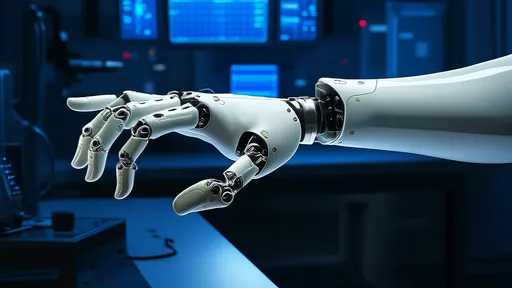
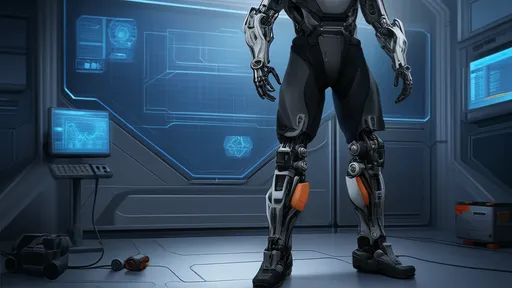
In laboratories and rehabilitation centers worldwide, a quiet revolution is taking place in how we approach human mobility. Exoskeleton technology, once confined to the realms of science fiction, has evolved into sophisticated systems capable of learning and adapting to individual users' walking patterns. At the heart of this transformation lies gait learning algorithms - complex mathematical frameworks that enable these mechanical suits to understand, predict, and respond to human movement in real-time.
The complexity of human gait has long fascinated researchers and engineers alike. Each person's walking pattern represents a unique signature, shaped by factors ranging from anatomy and physiology to learned behaviors and even emotional states. Traditional exoskeletons relied on pre-programmed movement patterns that often felt unnatural to users, requiring significant conscious effort to synchronize with the device. The advent of machine learning has changed this paradigm entirely, allowing exoskeletons to observe, analyze, and mirror the wearer's natural movements.
Modern gait learning algorithms employ various approaches to achieve this symbiosis between human and machine. Some systems utilize reinforcement learning, where the exoskeleton receives feedback about its performance and gradually adjusts its parameters to optimize comfort and efficiency. Others implement neural networks trained on vast datasets of human motion, enabling the device to recognize patterns and anticipate movements before they occur. The most advanced systems combine multiple techniques, creating adaptive control systems that evolve continuously as they interact with their users.
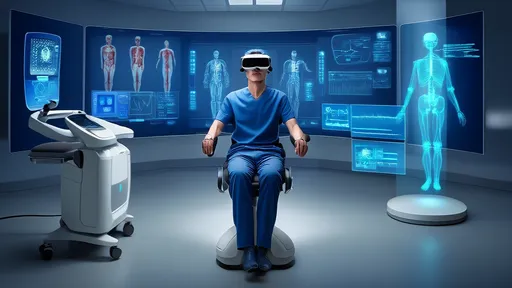
Clinical applications of these intelligent exoskeletons are particularly promising. For individuals recovering from strokes or spinal cord injuries, gait learning algorithms can provide precisely the right amount of assistance at exactly the right moment in the walking cycle. Unlike static rehabilitation devices, these adaptive systems can progressively challenge patients as their abilities improve, creating personalized therapy regimens that adjust in real-time. Research has shown that this approach not only accelerates recovery but also leads to more natural movement patterns compared to traditional rehabilitation methods.
The military and industrial sectors have also shown keen interest in adaptive exoskeleton technology. Soldiers carrying heavy loads over difficult terrain could benefit from systems that learn their preferred walking patterns while providing optimal support. Factory workers performing repetitive tasks might use exoskeletons that adapt to their movements, reducing fatigue and preventing injuries. In these applications, the ability to learn and adapt to individual users becomes crucial, as standardized solutions often fail to account for the diversity of human bodies and movement styles.
Technical challenges remain significant hurdles in the development of robust gait learning algorithms. One major obstacle involves the so-called "interaction problem" - how to create systems that can generalize learning across different activities and environments. An exoskeleton that has learned to assist with walking on flat surfaces must also adapt to stairs, slopes, and uneven terrain. Researchers are addressing this by developing hierarchical learning architectures where higher-level algorithms manage overall strategy while lower-level systems handle immediate adjustments.
Another critical challenge lies in ensuring safety while allowing for adaptation. Unlike many machine learning applications where errors might mean incorrect recommendations or lost revenue, mistakes in exoskeleton control could lead to falls or injuries. This has led to the development of sophisticated constraint systems that limit how much and how quickly algorithms can adapt during actual use, while allowing more aggressive learning during supervised training sessions.
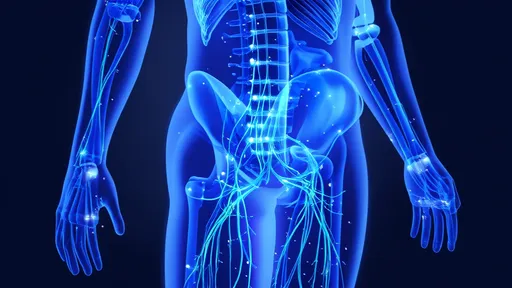
The future of exoskeleton gait learning algorithms appears bright, with several promising directions emerging. One involves incorporating additional data streams beyond traditional motion capture, such as muscle activity measurements or even brain signals. This could enable exoskeletons to respond not just to visible movements, but to the wearer's intentions before they physically manifest. Another direction focuses on transfer learning - allowing devices to share knowledge between users while maintaining individual customization, potentially reducing the training time required for new users.
As these technologies mature, ethical considerations are coming to the forefront. Questions about data privacy (given the intimate movement data collected), accessibility (ensuring these expensive technologies benefit broad populations), and even human identity (as we increasingly merge with machines) will need careful consideration. The field stands at an exciting crossroads, where technological potential meets profound questions about what it means to be human in an age of adaptive machines.
The development of exoskeleton gait learning algorithms represents more than just technical progress - it offers a glimpse into a future where technology adapts to human needs with unprecedented sensitivity. From restoring mobility to those who have lost it, to enhancing human capabilities beyond natural limits, these intelligent systems promise to redefine our relationship with our own bodies. As research continues to advance, we may soon find these adaptive exoskeletons moving seamlessly from laboratories into our daily lives, changing forever how we think about human movement and machine intelligence.

By /Jul 21, 2025
By /Jul 21, 2025

By /Jul 21, 2025
By /Jul 21, 2025
By /Jul 21, 2025
By /Jul 21, 2025
By /Jul 21, 2025
By /Jul 21, 2025
By /Jul 21, 2025
By /Jul 21, 2025
By /Jul 21, 2025
By /Jul 21, 2025

By /Jul 21, 2025
By /Jul 21, 2025
By /Jul 21, 2025
By /Jul 21, 2025
By /Jul 21, 2025

By /Jul 21, 2025
By /Jul 21, 2025
By /Jul 21, 2025