Stroke Rehabilitation VR Scenario Library

Jul 21, 2025 By

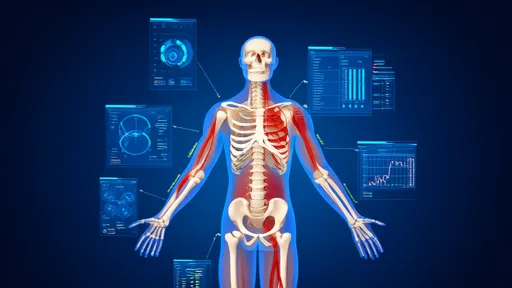
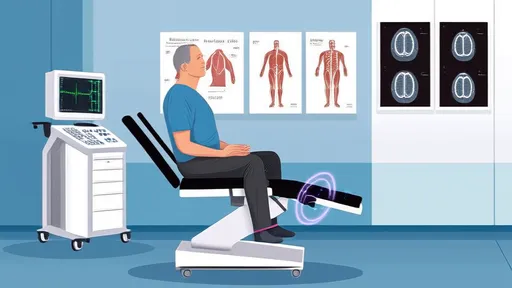
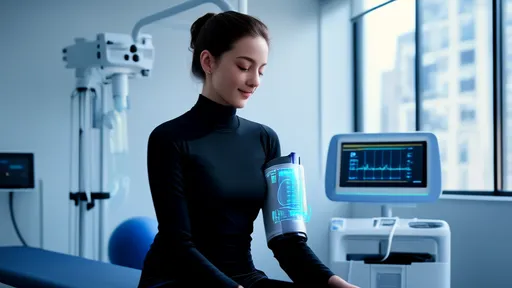
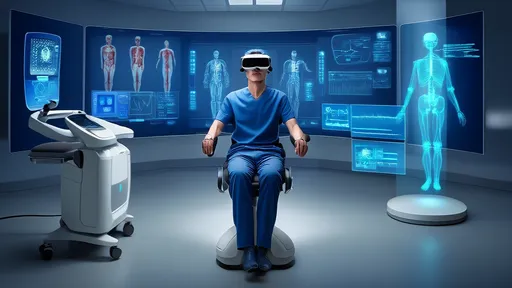
The field of stroke rehabilitation is undergoing a transformative shift with the integration of virtual reality (VR) technology. As healthcare professionals seek innovative ways to improve patient outcomes, VR-based rehabilitation scenarios are emerging as a powerful tool in post-stroke recovery. These immersive environments offer patients engaging and adaptive exercises that can accelerate motor and cognitive recovery while providing clinicians with valuable data to track progress.

Recent advancements in VR stroke rehabilitation have led to the development of comprehensive scene libraries tailored to address various impairment levels. These virtual scenarios range from basic limb movement exercises to complex activities of daily living, all designed to stimulate neuroplasticity. What sets these VR systems apart is their ability to provide real-time feedback, adjust difficulty levels dynamically, and create a safe environment for patients to practice movements without fear of injury.

The therapeutic benefits of VR rehabilitation extend beyond physical recovery. Patients often report higher motivation levels when engaged in virtual therapy compared to traditional methods. The gamification elements incorporated into many VR scenarios transform repetitive exercises into challenging yet enjoyable tasks. This psychological aspect proves crucial in maintaining patient adherence to rehabilitation programs, which typically require consistent, long-term effort.

Clinical studies have demonstrated promising results for VR-based stroke rehabilitation. Research indicates that patients using VR systems show significant improvements in upper limb function, balance, and gait compared to conventional therapy alone. The technology's capacity to create high-repetition, task-specific training environments appears to be particularly effective in promoting motor recovery. Furthermore, VR allows for the precise measurement of movement parameters, enabling therapists to quantify progress with unprecedented accuracy.

One of the most exciting developments in this field is the creation of customizable VR scene libraries. These repositories contain hundreds of pre-designed rehabilitation scenarios that clinicians can tailor to individual patient needs. From virtual kitchens for practicing meal preparation to simulated outdoor environments for balance training, these scenes address the diverse challenges stroke survivors face in returning to independent living. The flexibility of these systems means they can accommodate patients at various stages of recovery, from acute care to long-term rehabilitation.

The implementation of VR rehabilitation scenes also addresses several practical challenges in stroke care. Traditional therapy often requires specialized equipment and one-on-one therapist time, which can limit access and frequency of treatment. VR systems, once set up, allow patients to perform many exercises independently under remote supervision. This not only increases the potential therapy dosage but also makes rehabilitation more accessible to patients in remote areas or those with limited mobility.

As the technology matures, researchers are exploring how to enhance VR rehabilitation scenes with additional sensory feedback. Haptic devices that provide tactile sensations and temperature variations are being integrated to create more immersive experiences. Some advanced systems now incorporate brain-computer interfaces, allowing patients to control virtual environments through neural signals when physical movement remains limited. These innovations promise to push the boundaries of what's possible in stroke recovery.

The future of stroke rehabilitation likely involves hybrid approaches that combine VR with other emerging technologies. Artificial intelligence algorithms can analyze patient performance data to automatically adjust scene difficulty or suggest new exercises. Cloud-based platforms enable the sharing of successful rehabilitation scenes across treatment centers, creating global repositories of effective therapeutic content. Such collaborative approaches could dramatically accelerate progress in the field.

While challenges remain regarding cost, standardization, and accessibility, the potential of VR scene libraries for stroke rehabilitation is undeniable. As hardware becomes more affordable and software more sophisticated, these systems are poised to move from research labs and specialized clinics into mainstream healthcare settings. The coming years will likely see VR rehabilitation evolve from an innovative supplement to conventional therapy into a cornerstone of stroke recovery programs worldwide.

Healthcare providers considering implementing VR rehabilitation should focus on selecting systems with evidence-based scene libraries and robust progress tracking features. Proper staff training and patient orientation are equally important to maximize the technology's benefits. As with any therapeutic intervention, VR rehabilitation works best when integrated into a comprehensive, patient-centered care plan developed by multidisciplinary teams.

The development of stroke rehabilitation VR scene libraries represents more than just technological progress—it signifies a fundamental shift in how we approach recovery. By creating engaging, measurable, and adaptable therapeutic environments, these systems offer new hope to stroke survivors worldwide. As research continues and technology advances, the boundaries between virtual rehabilitation and real-world recovery may become increasingly seamless, ultimately leading to better outcomes and improved quality of life for patients.

Recommend Posts
Health

AI-assisted Training for Language Impairments

By /Jul 21, 2025

The rapid advancement of artificial intelligence has opened new frontiers in overcoming language barriers, creating unprecedented opportunities for global communication and education. Across industries and academic institutions, AI-powered language training tools are transforming how people acquire new languages and improve their communication skills.
Health

Electromyographic Prosthetic Tactile Feedback System

By /Jul 21, 2025

The field of prosthetic technology has witnessed a groundbreaking advancement with the development of myoelectric prosthetic limbs integrated with tactile feedback systems. These sophisticated devices are transforming the lives of amputees by restoring not just mobility but also the sense of touch. Unlike traditional prosthetics, which rely solely on visual cues for operation, myoelectric prosthetics with tactile feedback bridge the gap between the artificial limb and the user’s nervous system, creating a more intuitive and natural experience.
Health

Nutritional Dynamic Monitoring Technology during Lactation

By /Jul 21, 2025

The field of maternal and infant health has witnessed significant progress in recent years, particularly in the area of nutritional monitoring during lactation. As breastfeeding remains a critical phase for both mother and child, researchers have developed sophisticated dynamic monitoring technologies to ensure optimal nutrient intake. These innovations are transforming how healthcare providers support lactating women, moving beyond traditional static dietary assessments to real-time, personalized nutrition tracking.
Health

Intelligent Drug-Releasing Wound Dressing System

By /Jul 21, 2025

The field of wound care has witnessed a revolutionary advancement with the development of intelligent drug delivery systems for wound dressings. These cutting-edge technologies are transforming how chronic and acute wounds are treated, offering targeted therapy with minimal human intervention. By integrating responsive materials, sensors, and controlled-release mechanisms, smart dressings promise to accelerate healing while reducing complications.
Health

Spinal Cord Stimulation for Restoring Bladder Function

By /Jul 21, 2025

For millions of people living with spinal cord injuries or neurological disorders, bladder dysfunction remains one of the most challenging and life-altering consequences. The loss of voluntary control over urination not only affects physical health but also takes a significant psychological toll. However, recent advancements in spinal cord stimulation (SCS) are offering new hope for restoring bladder function in these patients.
Health

Optimization of Pore Structure in 3D Printed Organ Scaffolds

By /Jul 21, 2025

The field of regenerative medicine has witnessed remarkable advancements in recent years, with 3D-printed organ scaffolds emerging as a promising solution for tissue engineering. Among the critical factors influencing their success, pore optimization stands out as a pivotal element that determines the scaffold's functionality, cellular behavior, and eventual integration into the host tissue. Researchers are now delving deeper into the intricate balance between porosity, mechanical strength, and biological performance to unlock the full potential of these structures.
Health

Digital Twin Assessment of Joint Motion Range

By /Jul 21, 2025

The medical technology landscape is undergoing a quiet revolution as digital twin technology begins transforming how we assess and monitor joint mobility. This emerging approach creates dynamic virtual models of human joints that mirror their physical counterparts with startling accuracy, opening new frontiers in musculoskeletal evaluation.
Health

Parkinson's Disease Tremor Therapy Parameters

By /Jul 21, 2025

Parkinson’s disease, a progressive neurodegenerative disorder, continues to challenge both patients and clinicians in managing its motor and non-motor symptoms. Among the array of adjunct therapies being explored, vibration therapy has garnered attention for its potential to improve mobility, reduce tremors, and enhance quality of life. Unlike pharmaceutical interventions, vibration therapy offers a non-invasive approach with minimal side effects, making it an appealing option for long-term management. However, the efficacy of this therapy hinges on precise parameters, including frequency, amplitude, duration, and application method.
Health

Intelligent Monitoring of Burn Pressure Garments

By /Jul 21, 2025

Burn injuries are among the most physically and emotionally devastating traumas a person can endure. For survivors, the road to recovery often involves months or even years of wearing specialized pressure garments to minimize scarring and improve functional outcomes. These garments, while effective, have remained largely unchanged for decades – until now. A new wave of smart pressure garments equipped with advanced monitoring capabilities is poised to revolutionize post-burn care.
Health

Game-Based Design for Vestibular Rehabilitation

By /Jul 21, 2025

The intersection of vestibular rehabilitation and gamification represents one of the most exciting frontiers in modern therapeutic design. For patients suffering from dizziness, imbalance, or vertigo due to vestibular disorders, traditional exercises can often feel repetitive and monotonous. This is where game-based interventions step in, transforming rehabilitation into an engaging, interactive experience that motivates patients while delivering measurable clinical outcomes.
Health

New Findings in Placental Microbiome Research

By /Jul 21, 2025

For decades, the placenta was considered a sterile environment, a protective barrier shielding the developing fetus from microbial invaders. This long-held belief shaped obstetric practices and our fundamental understanding of fetal development. However, groundbreaking research over the past fifteen years has radically transformed this perspective, revealing that the placenta harbors its own unique microbial ecosystem - findings that are reshaping reproductive medicine and neonatal care.
Health

Breakthrough in Artificial Skin Sensor Precision

By /Jul 21, 2025

The field of prosthetics and robotics has taken a monumental leap forward with recent breakthroughs in artificial skin sensing precision. Researchers across multiple institutions have achieved unprecedented levels of tactile sensitivity in synthetic skin materials, bringing us closer than ever to replicating the remarkable sensory capabilities of human skin.
Health

Intervention of Intestinal Flor Colonization in Preterm Infants

By /Jul 21, 2025

The delicate ecosystem of the human gut microbiome begins its formation at birth, but for premature infants, this process is often disrupted by medical interventions, sterile environments, and underdeveloped organ systems. Emerging research reveals that targeted microbial interventions during this critical window may reshape health outcomes for preterm neonates, offering protection against devastating conditions like necrotizing enterocolitis (NEC) and late-onset sepsis. Scientists are now decoding how microbial therapeutics could rewrite the survival narrative for these vulnerable patients.
Health

Respiratory Rehabilitation Resistance Adjustment Equipment

By /Jul 21, 2025

The field of respiratory rehabilitation has witnessed remarkable advancements in recent years, with impedance modulation devices emerging as a groundbreaking innovation. These sophisticated tools are transforming how clinicians approach lung function recovery, offering personalized therapy that adapts to patients' unique physiological needs. Unlike traditional respiratory equipment, these devices employ dynamic resistance mechanisms that respond in real-time to a patient's breathing patterns, creating a more natural and effective rehabilitation process.
Health

Control of Wear Particles in Artificial Joints

By /Jul 21, 2025

The issue of wear particles in artificial joints has long been a critical concern in orthopedic medicine. As the population ages and joint replacement surgeries become increasingly common, the longevity and performance of these implants are under scrutiny. Among the various factors affecting implant durability, the generation of wear debris stands out as a primary culprit behind complications such as osteolysis, inflammation, and eventual implant failure. Researchers and manufacturers are continuously exploring innovative materials and design strategies to mitigate this persistent challenge.
Health

Stroke Rehabilitation VR Scenario Library

By /Jul 21, 2025

The field of stroke rehabilitation is undergoing a transformative shift with the integration of virtual reality (VR) technology. As healthcare professionals seek innovative ways to improve patient outcomes, VR-based rehabilitation scenarios are emerging as a powerful tool in post-stroke recovery. These immersive environments offer patients engaging and adaptive exercises that can accelerate motor and cognitive recovery while providing clinicians with valuable data to track progress.
Health

Promotion of Endothelialization on Cardiac Stents with Coating

By /Jul 21, 2025

The development of drug-eluting stents (DES) has revolutionized interventional cardiology by significantly reducing restenosis rates compared to bare-metal stents. However, the delayed endothelialization of these devices remains a critical challenge, as it can lead to late stent thrombosis and other complications. Recent advancements in stent coating technologies aim to accelerate endothelial recovery while maintaining antirestenotic properties, striking a delicate balance between healing and protection.
Health

New Standard for Oxygen Permeability of Contact Lenses

By /Jul 21, 2025

The world of contact lenses is undergoing a significant shift as new standards for oxygen permeability take center stage. For decades, the industry has relied on outdated metrics to gauge the safety and comfort of lenses, but recent advancements in material science and a deeper understanding of ocular physiology have prompted regulators to rethink these benchmarks. The updated guidelines, which prioritize long-term eye health over short-term convenience, are poised to reshape how manufacturers design and market their products.
Health

Exoskeleton Gait Learning Algorithm

By /Jul 21, 2025

In laboratories and rehabilitation centers worldwide, a quiet revolution is taking place in how we approach human mobility. Exoskeleton technology, once confined to the realms of science fiction, has evolved into sophisticated systems capable of learning and adapting to individual users' walking patterns. At the heart of this transformation lies gait learning algorithms - complex mathematical frameworks that enable these mechanical suits to understand, predict, and respond to human movement in real-time.
Health

Vibration Damping Design for Surgical Robot Materials

By /Jul 21, 2025

The field of surgical robotics has witnessed remarkable advancements in recent years, with material innovation playing a pivotal role in enhancing performance. Among the critical challenges in designing these sophisticated machines is vibration damping—a factor that directly impacts precision during delicate procedures. Engineers are now exploring novel material compositions and structural designs to minimize unwanted oscillations without compromising the robot's agility or sterility requirements.